
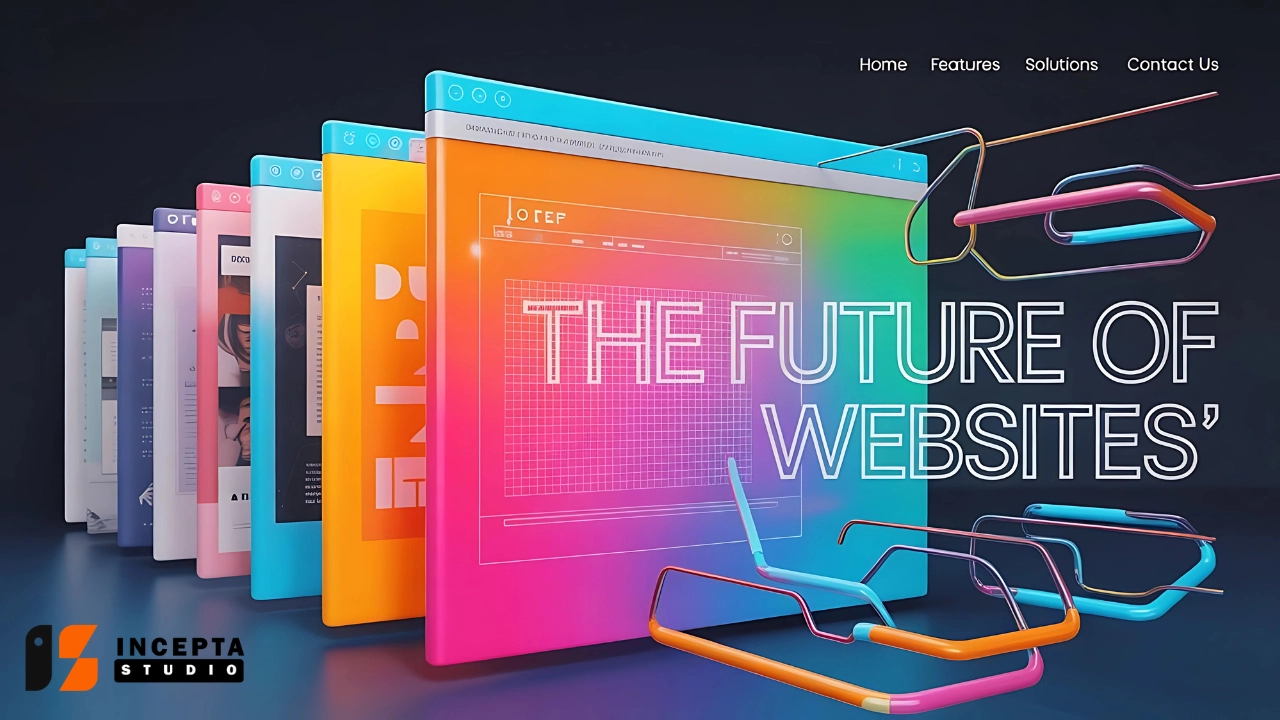
The Future of Websites: Why Cookie-Cutter Templates Are Dead
In today’s fast-paced digital world, websites aren’t just online brochures—they’re living, breathing ecosystems that shape brand identity and drive growth. Businesses that rely on cookie-cutter templates are already falling behind. The Future of Websites is about personalization, AI integration, and experiences that adapt to user needs. This blog explores why templates are failing, what the next era of web design looks like, and why companies like Incepta Studio are at the forefront of this shift.

The Evolution of Web Design
Web design has traveled an incredible journey over the last three decades. From static, text-heavy pages to immersive, AI-driven experiences, every era has left its mark. This progression shows how technology and user expectations shape the internet we know today. And if one thing is certain, it’s this: the Future of Websites will continue evolving at a breakneck pace, rewarding businesses that adapt and punishing those that don’t.
From Static Pages to Interactive Experiences
In the 1990s, websites were little more than digital brochures. Built with raw HTML, they offered text, hyperlinks, and maybe a few images that loaded pixel by pixel. Think of NASA’s early homepage or the first Yahoo directory—functional but rigid. These sites provided information, but there was no sense of interaction or storytelling.
Case Study: Craigslist launched in 1995 and, despite its barebones HTML look, became iconic. Its success wasn’t design-driven but utility-driven, showing how people craved function over beauty in the early internet.
Yet, as demand grew, this static model quickly became limiting. Users wanted more than just information—they wanted engagement.
The Template Era: Accessibility Meets Repetition
The 2000s brought platforms like WordPress, Wix, and Squarespace into the spotlight. These tools revolutionized accessibility, enabling small businesses and individuals to create websites without knowing a line of code. Suddenly, anyone could build an online presence. The Future of Websites belongs to those who embrace change.
Case Study: WordPress, founded in 2003, now powers over 40% of the web. It enabled millions of small businesses to establish themselves online quickly. However, the flip side was a flood of cookie-cutter designs. Visit ten sites built on the same template, and they often looked identical.
This democratization was important but also created a sea of sameness. It became harder for businesses to stand out, proving that convenience alone can’t sustain long-term digital growth.
The Responsive Revolution
The 2010s flipped the script with the smartphone boom. Suddenly, websites had to work on desktops, tablets, and phones seamlessly. Responsive design became the standard, allowing layouts to adapt to any screen size.
Case Study: Apple’s website during this era set the gold standard for responsive design. Whether viewed on a Mac, iPhone, or iPad, the experience was consistently sleek and optimized. Apple understood early on that the Future of Websites meant accessibility across devices without compromising performance.
Frameworks like Bootstrap emerged, helping developers build mobile-first designs quickly. This wasn’t just a design upgrade—it was a shift in mindset. Businesses realized that a poor mobile experience could kill conversions. For example, Google’s 2015 “Mobilegeddon” update prioritized mobile-friendly sites in search results, forcing businesses to adapt or vanish from visibility.
AI & Personalization: The 2020s and Beyond
Today, we live in the age of AI-driven personalization. Websites don’t just react—they anticipate. Data analytics, machine learning, and AI tools allow businesses to create tailored experiences for every visitor.
Case Study: Amazon is a masterclass in personalization. From product recommendations to dynamic pricing, its website adapts to each user’s history and preferences. This model has influenced e-commerce across the globe, setting expectations for what the Future of Websites should deliver.
Meanwhile, Netflix shows how personalization applies beyond shopping. Its recommendation engine powers over 80% of what users watch, proving that content delivery can be hyper-individualized. This same principle is now being applied to everything from online learning platforms to SaaS dashboards.
Emerging technologies like AR, VR, and voice search are also shaping what’s next. Imagine virtually trying on clothes before buying them or navigating a site through voice commands alone. These aren’t distant dreams—they’re active frontiers in web design.
The Takeaway
The timeline of web design paints a clear picture: the Future of Websites is in constant motion. What started as static pages grew into templates, transformed into responsive layouts, and has now advanced to intelligent, adaptive platforms.
Businesses that cling to outdated models—whether a non-mobile site or a generic template—risk irrelevance. In contrast, forward-thinking brands see their websites as living, evolving ecosystems. They leverage personalization, embrace new technologies, and create user journeys that feel human rather than mechanical.
The web is no longer about just existing online; it’s about thriving there. And as technology advances, the Future of Websites will only become more immersive, intuitive, and indispensable for businesses that want to lead rather than lag.
What Are Cookie-Cutter Templates?
Cookie-cutter templates are pre-designed site structures offered by platforms like Wix, WordPress themes, or Shopify. They’re quick, affordable, and easy for beginners—but they come with big limitations. In the Future of Websites, these shortcuts won’t cut it.
Pros of Templates:
-
Low cost
-
Fast setup
-
Beginner-friendly
Cons of Templates:
-
Generic design
-
Poor SEO optimization
-
Limited customization
-
Lack of scalability
-
Difficulty integrating AI-driven personalization
-
Outdated designs that fail to keep up with new UX standards
At first glance, templates feel like the perfect launchpad. A business owner clicks a theme, replaces demo content with their own, and voilà—a website is live. But what’s gained in speed is lost in originality and long-term impact. Think of it like renting a furnished apartment: convenient at the start, but you’re stuck with someone else’s furniture, layout, and limitations.From code to creativity, every line written now shapes The Future of Websites.
In today’s competitive landscape, where digital presence defines credibility, templates create a dangerous illusion of professionalism. They look polished on the surface but lack the backbone needed for serious growth. Search engines penalize duplicate structures, meaning your “pretty” template site might rank lower than a lean, custom-built competitor. Customers also notice the sameness—when five businesses in the same niche are running identical layouts, the brand story gets diluted.
Another pitfall? Flexibility. Businesses evolve, but templates rarely do. Need to integrate a custom CRM, AI chatbot, or advanced analytics pipeline? You’ll quickly find yourself fighting with code that was never built for expansion. Security is another red flag: templates often depend on outdated plugins or third-party add-ons, creating vulnerabilities hackers love to exploit. Outdated designs fade fast, but innovation fuels The Future of Websites.
The truth is, cookie-cutter templates serve as digital training wheels. They help startups or hobbyists get online, but they’re not built to win in a global marketplace where personalization, speed, and scalability are king. The brands that thrive in 2025 and beyond will be those willing to break free from the mold and invest in tailored, future-ready digital ecosystems.
Why Templates Fail in 2025 and Beyond
The digital landscape isn’t slowing down—it’s accelerating. Businesses that still rely on cookie-cutter templates are finding themselves outpaced by competitors who invest in custom, future-proof websites. In 2025 and beyond, the failures of templates become even more glaring as technology, user expectations, and search engines continue to evolve. The Future of Websites is about connection, not just clicks.
The Hidden Cost of Templates
At first glance, templates look like an affordable solution. But what appears cost-effective today often becomes a burden tomorrow. Maintenance issues, limited scalability, and poor optimization lead to higher expenses in the long run. Many businesses end up rebuilding from scratch, paying twice for what could’ve been done right the first time. Businesses that adapt will own tomorrow; that’s the truth of The Future of Websites.
Where Templates Fall Short
-
Brand Differentiation: Your website should tell your unique story, not echo the same visuals as hundreds of others. Templates force conformity, making your brand forgettable.
-
SEO Limitations: Prebuilt layouts often carry unnecessary scripts and bloated CSS, dragging down performance. Google’s algorithm in 2025 is ruthless about page speed and mobile experience, punishing sites that lag behind.
-
UX Constraints: Templates prioritize aesthetics over flow. Visitors might like the look, but if navigation feels clunky, they bounce.
-
Integration Challenges: Modern businesses rely on automation, AI tools, and data-driven CRMs. Templates weren’t built to handle that level of complexity.
-
Security Weaknesses: Outdated plugins and third-party code create backdoors for hackers. A single breach can cost thousands and destroy trust.
A template may work for a portfolio or hobby blog, but for serious businesses, it’s a liability that limits growth.
The Future of Websites: Personalization at Scale
The web is moving toward hyper-personalization. Static experiences don’t cut it anymore. Customers expect websites to adapt in real time, giving them content, products, and services aligned with their needs. According to McKinsey, companies that excel at personalization generate 40% more revenue from those efforts compared to their peers.
Personalization goes beyond using someone’s first name in an email. It means building websites that:
-
Adjust layouts based on device type and browsing habits.
-
Serve different offers depending on user behavior.
-
Deliver location-based recommendations instantly.
-
Deploy AI chatbots that evolve with every conversation.
-
Create loyalty by making every interaction feel custom-built.
This shift is why templates, locked in static structures, will always trail behind custom builds designed for adaptability.
User Experience: The Deciding Factor
UX is no longer a luxury—it’s survival. In 2025, users are flooded with choices. If your site isn’t lightning-fast, intuitive, and inclusive, they’ll leave within seconds. Accessibility, responsive design, and thoughtful micro-interactions are now competitive advantages.
Businesses that win are those that treat their websites not as brochures but as living ecosystems, where every click feels effortless and rewarding. The Future of Websites isn’t static, it’s living, breathing, and evolving daily.
SEO and Performance: The Core Advantage
Templates often treat SEO as an afterthought, but in today’s environment, it’s the heartbeat of growth. With custom websites:
-
Clean code improves speed and reduces server strain.
-
Schema markup makes your content stand out in SERPs.
-
Content strategies can align directly with business goals.
-
Core Web Vitals optimizations ensure Google ranks you higher.
Search is increasingly voice-driven and AI-assisted. To compete, your website must evolve with these trends—something no static template can guarantee.
The Rise of AI and No-Code
AI and no-code tools are transforming how websites are built, but they aren’t silver bullets. No-code platforms make building easier, yet without strategic custom development, businesses risk creating cookie-cutter experiences with the same weaknesses as templates.
AI, meanwhile, is a force multiplier. It empowers businesses to predict user needs, test designs in real-time, and deliver experiences that feel futuristic. But it needs a strong, flexible foundation—a custom-built site ready to integrate advanced technologies.
The Takeaway: Build for the Future, Not the Past
Templates are shortcuts that cut too deep. In 2025 and beyond, the winners will be businesses that embrace adaptability, scalability, and personalization through custom development.
At Incepta Studio, we’ve seen firsthand how moving beyond templates accelerates growth. Whether it’s doubling conversions, improving SEO rankings, or enhancing user trust, custom websites give businesses the agility they need to thrive in a fast-changing world. Cookie-cutter templates are history—welcome to The Future of Websites.
The web of tomorrow isn’t waiting—it’s already here. The question is: will your business lead or lag behind?
Why Incepta Studio Builds for the Future of Websites
At Incepta Studio, we don’t just design websites—we engineer digital ecosystems that are built to evolve with your business. In an online world where trends shift overnight and technology rewrites the rules every few months, a basic website simply isn’t enough. You need a platform that adapts, grows, and scales in lockstep with your goals. That’s where we come in.
Custom Design, Not Cookie-Cutter
Every brand has its own DNA, and your website should reflect that uniqueness. We ditch the generic templates and instead craft custom designs that embody your brand identity, engage your audience, and deliver a seamless user experience. It’s not just about looking good; it’s about making your visitors feel at home and inspired to take action.
SEO That Works Harder
Ranking on Google isn’t magic—it’s strategy. Our SEO-first approach ensures that every page, every headline, and every block of content is optimized for visibility and performance. From technical site audits to keyword research, we position your business to climb search results and attract the right traffic.
AI-Driven Personalization
The Future of Websites lies in personalization, and we’re already building for it. With AI-driven tools, we create experiences that adjust to user behavior in real-time. Whether it’s product recommendations, tailored content, or dynamic calls-to-action, we help businesses speak directly to each visitor’s needs.
Built for Growth and Security
Growth without structure is chaos. That’s why we use scalable architecture that can expand as your business evolves—no painful rebuilds, no lost momentum. And because trust is everything online, we integrate robust security best practices into every project, ensuring that your data and your customers remain protected.
Building the Future, Today
The Future of Websites isn’t waiting for tomorrow—it’s unfolding right now. Brands that adapt and invest in forward-thinking solutions are the ones that thrive. At Incepta Studio, we’re not just keeping up with the trends; we’re setting the pace.
Ready to future-proof your digital presence? Learn more about Incepta Studio and let’s build something extraordinary together.
FAQs: Understanding the Future of Websites
The Future of Websites is a topic filled with questions, debates, and a lot of curiosity. Businesses, developers, and entrepreneurs all want to know what’s next and how to prepare. Below are some of the most common questions that come up when discussing the next era of web design and development.
Q1: Why are cookie-cutter templates no longer effective?
Cookie-cutter templates once served a purpose—they allowed anyone to get a website up and running quickly without coding skills. But in today’s digital landscape, they’re more of a liability than an asset. These templates lack scalability, making it hard for businesses to grow online. They don’t offer the level of personalization that modern audiences expect, nor do they align with the technical demands of advanced SEO strategies. As search engines prioritize speed, mobile responsiveness, and structured data, generic templates fall short. In the Future of Websites, uniqueness and adaptability will matter far more than quick-fix design solutions.
Q2: What role will AI play in the Future of Websites?
AI is not just a buzzword—it’s becoming the backbone of digital experiences. From AI-powered chatbots to personalized content recommendations, artificial intelligence will create websites that feel alive and adaptive. Imagine visiting an eCommerce store where the layout, product suggestions, and even promotions shift dynamically based on your behavior and interests. That’s the Future of Websites: smarter, predictive, and highly user-centric. AI will also automate tedious tasks like SEO optimization, image tagging, and accessibility improvements, allowing businesses to focus on strategy and creativity rather than manual upkeep.
Q3: Is custom web development more expensive?
Yes, custom web development often comes with a higher upfront cost compared to using a template or a no-code platform. However, think of it as planting a tree versus buying a plastic one. A custom-built website grows with your business, adapts to new technologies, and delivers higher conversions over time. It’s not just a site—it’s an investment in long-term digital credibility. In the Future of Websites, businesses that choose custom development will be positioned to outpace their competitors with better scalability, security, and performance.
Q4: How can small businesses prepare for the Future of Websites?
Small businesses don’t need to overhaul everything at once. The best approach is gradual but strategic. Start with the essentials: user-friendly navigation, strong SEO foundations, and responsive design. From there, add personalization features—like tailored content, smart forms, or AI chatbots—that enhance customer engagement. The Future of Websites won’t just favor large corporations; it will reward small businesses that are agile, creative, and willing to embrace emerging tools.
Q5: Will no-code platforms replace developers?
No-code platforms like Webflow or Wix empower beginners and small projects, but they can’t fully replace developers. Why? Because the Future of Websites will demand depth—security, integrations, data handling, and scalability—that no-code solutions simply can’t provide at a professional level. Developers bring problem-solving, optimization, and custom logic to the table, ensuring websites don’t just look good but also perform at enterprise standards.
Conclusion: Time to Ditch the Templates
Cookie-cutter templates had their moment, but their limitations are too glaring for the digital age we’re stepping into. The Future of Websites is personalized, scalable, and intelligent. Businesses that adapt now will thrive, while those who cling to outdated templates will fade into the background of digital noise. Bold brands aren’t waiting; they’re already shaping The Future of Websites.
🚀 Ready to build your future? Connect with Incepta Studio and step confidently into the next era of web design.